
A complete primer for first-time readers
Reading Sophocles
Oedipus the King from translation to context: a comprehensive guide to the characters, myths, scenes and theater of Sophocles’ work, with Jebb’s translation and commentary.
Recommended Translation
As an Amazon Associate, we earn from qualifying purchases.
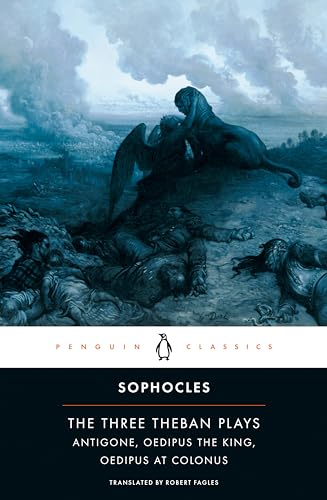
Robert Fagles (1984)
A standard verse translation of the three Theban plays, with Bernard Knox’s introduction; often assigned in university courses.
Buy on Amazon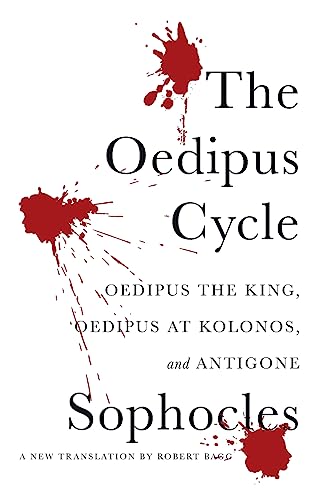
Robert Bagg (2012)
Robert Bagg’s verse translations of Oedipus the King, Oedipus at Kolonos and Antigone in one volume.
Buy on Amazon
Jebb’s translation, free
Jebb’s 1904 prose translation in eleven parts, with Greek line numbers, his introduction and notes on the scenes and choral songs. The edition can be read online or obtained as a free PDF.
Quick Reference
Reference pages cover the story scene by scene, the characters, the house of Laïus, the Theban myths, Athens and the theater, the terms of Greek tragedy, and the play’s later history.
Three Things to Know Before Page One
Written for the festival
Sophocles (c. 496–406 BC) wrote Oedipus the King for the Athenian dramatic festival, probably in the 430s or 420s BC.
A search for a killer
Oedipus, king of Thebes, seeks the killer of his predecessor Laïus to lift a plague from the city, and finds that he himself is the killer.
Model of tragic plot
Aristotle’s Poetics treats Oedipus the King as the model of tragic plot. Oedipus proves to be the son of Laïus and of his own wife, Iocasta.
Sophocles and Oedipus the King
Sophocles (c. 496–406 BC) wrote Oedipus the King for the Athenian dramatic festival, probably in the 430s or 420s BC. The work tells how Oedipus, king of Thebes, sets out to find the killer of his predecessor Laïus in order to lift a plague from the city, and discovers that he is himself the killer, and the son of Laïus and of his own wife, Iocasta. Aristotle’s Poetics treats the work as the model of tragic plot.